
Review · JAPAN
Naha: Guided E-Bike Tour of the 12 Zodiac Temples
Shuri’s temples are easy to miss. They sit behind ordinary streets, traditional houses, and trees, not along one neat sightseeing route. This small-group e-bike tour gives you a practical way to connect them, with guides such as Maki, Maria, Reiji, Hiro, and Jojo bringing local stories to the ride.
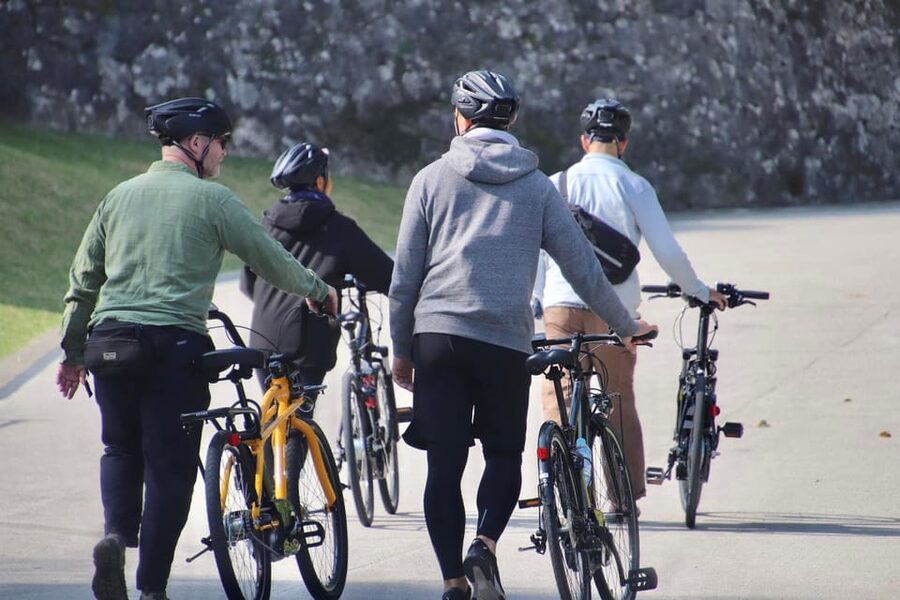
I like the quality electric bikes, which make Shuri’s hills far less tiring, and the helmet intercom system, which lets you hear your guide while riding. I also like the mix of famous sights and quiet stops, especially the old gates, gajumaru trees, and little shrines you may not find on your own.
The main consideration is simple: you need to be comfortable riding a bicycle in traffic and on hills. Three hours in Okinawa’s sun can also feel warm, so bring water, sunscreen, and a hat. Sandals and flip flops are not allowed.
Key points before you book
- Shuri’s side streets are the real attraction: The route reaches temples and shrines that are easy to overlook by car or on foot.
- Electric assistance matters: The bikes help with Shuri’s steel hills, but you still need basic cycling ability.
- Helmet intercoms improve the tour: You can hear directions and stories without stopping every few minutes.
- The route mixes major and minor sights: Shureimon Gate provides the classic photo, while small temples offer a quieter look at local customs.
- The group is limited to five people: That allows for a more personal pace and easier communication.
- The price is $95 for three hours: It covers the e-bike, helmet, intercom, and guide, but not food, drinks, or temple offerings.
Why an e-bike is a smart way to see Shuri
Naha is not flat, and Shuri is especially hilly. Walking between its temples takes time and energy, while a standard bicycle can make the climbs unpleasant. The electric bikes solve much of that problem without turning the outing into a passive sightseeing ride.
You still pedal, but the motor helps when the road rises. Several stops are separated by riding sections of about 15 to 20 minutes, so you get a real sense of the neighborhoods rather than simply being dropped at one attraction after another.
The ride begins at the shop near Makishi Station, about a five-minute walk from the monorail and next to a post office. You’ll be fitted with a bicycle and helmet before setting off. The helmet has an intercom system, a useful touch that lets your guide explain what you’re seeing and give directions as you ride.
This matters in two ways. First, you do not need to bunch up around the guide to hear the explanation. Second, the guide can help you handle traffic and turns, which is particularly useful if you are not used to cycling in a Japanese city.
The group limit is five people. That is small enough for the guide to check your comfort and adjust the pace, though you should not expect a private tour unless your booking happens to be the only one.
More RIB and Zodiac Boat Tours in the world:
- Tadoussac/Charlevoix: Whale Watching Zodiac Tour
★ 4.3 · 2,716 reviews - Exhilarating Rib experience – Dingle sea safari
★ 5.0 · 1,349 reviews - From Stavanger: RIB Tour to Lysefjord
★ 4.9 · 1,288 reviews
Shuri Kannon Temple and the first taste of old Okinawa
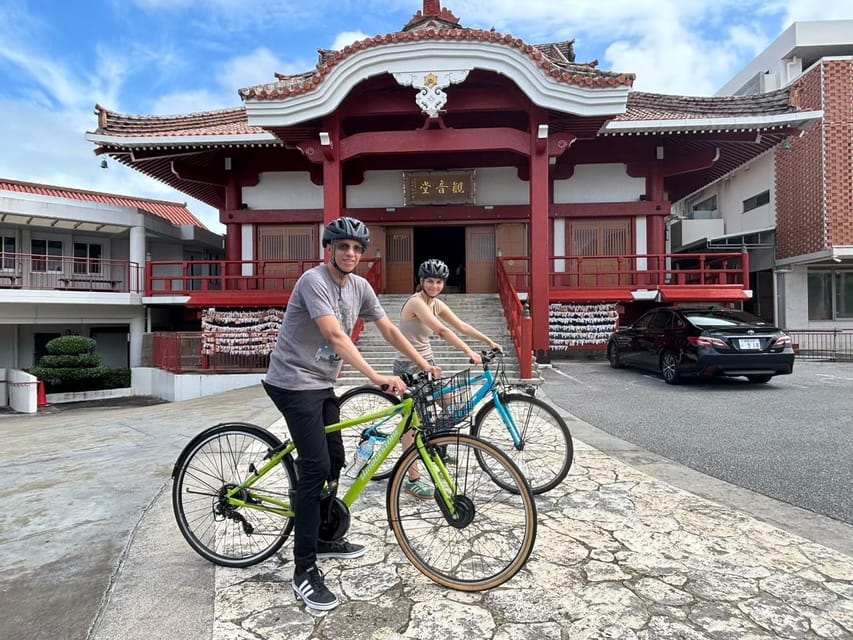
Shuri Kannon Temple is one of the most meaningful early stops. It served as a guardian temple during the Ryukyu Kingdom, the historic kingdom that ruled Okinawa before it became part of modern Japan.
The bright red temple has detailed carvings and decorations, and its position gives you views across Shuri. This is a good place to begin paying attention to the differences between Okinawan religious sites and the grander temples you may have seen on Japan’s main islands.
Your guide can explain the role of the temple and the customs connected with it. That context is valuable because these places are not simply photo stops. They remain part of local religious life, and the details of gates, statues, offerings, and colors carry meaning.
The site is also a reminder that this tour is not built around one huge landmark. It is about links between small places. You spend time looking closely, then return to the bike and move through the surrounding streets.
Ankokuji Temple, an old gate, and a large gajumaru
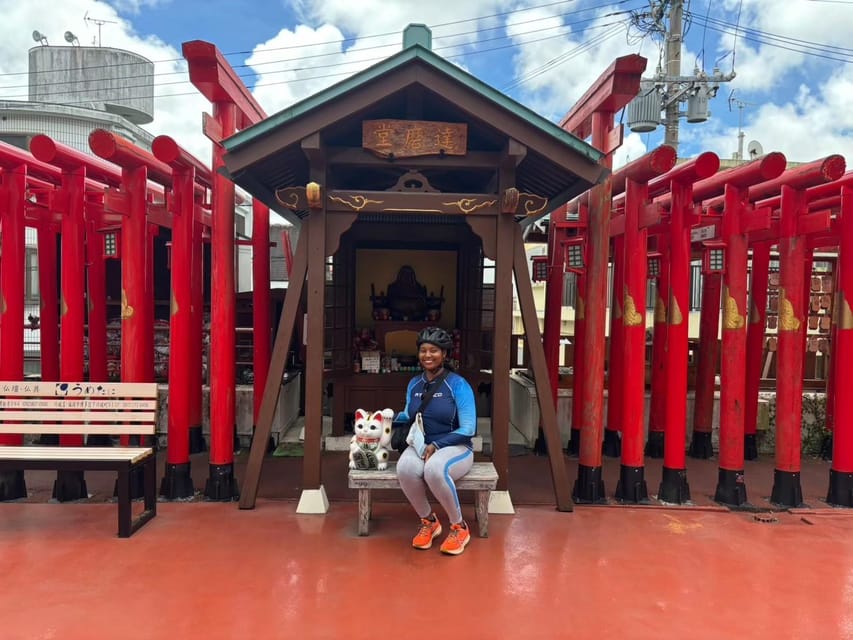
Ankokuji Temple offers a different mood. The temple is associated with traditional houses, an ancient gate, and a large gajumaru tree. The short visit makes it more of a focused stop than a long temple exploration, but that is part of the appeal.
The gajumaru, or banyan tree, gives the site a strong Okinawan character. Its roots and broad shape create a very different setting from a formal urban shrine. The old gate also gives your guide something concrete to point out when discussing the area’s past.
I would not expect a long guided lecture here. The stop is brief, so listen closely and use the time to notice the details around the entrance. The tour works best when you enjoy these short pauses rather than needing every temple to feel like a major attraction.
Shureimon Gate gives you the classic photo
Shureimon Gate is the most recognizable stop on the route. Its red structure is one of Okinawa’s best-known symbols, and it provides the clearest photo opportunity of the day.
The tour specifically allows time to photograph yourself with the bike in front of the gate. That makes the picture more personal than a standard landmark shot, though you should be mindful of other people using the area and follow your guide’s directions.
Shureimon also helps anchor the less familiar stops. You get the famous image, then see how the surrounding temples and lanes fit into the wider Shuri area. If you have already visited the gate independently, the e-bike route still gives it a useful place within a larger cultural circuit.
Same coastline, a different hull:
- Portimão: Benagil Caves Speed Boat Tour with Sunset Option
★ 4.8 · 11,663 reviews - Dubai: Marina, Atlantis, Palm & Burj Al Arab Speedboat Tour
★ 4.8 · 11,595 reviews - Blue cave, Mamma Mia and Hvar, 5 islands speedboat tour
★ 5.0 · 7,150 reviews - Portimão: Benagil Sea Caves Speedboat Adventure Tour
★ 4.8 · 6,546 reviews
Daruma Temple and prayers for health
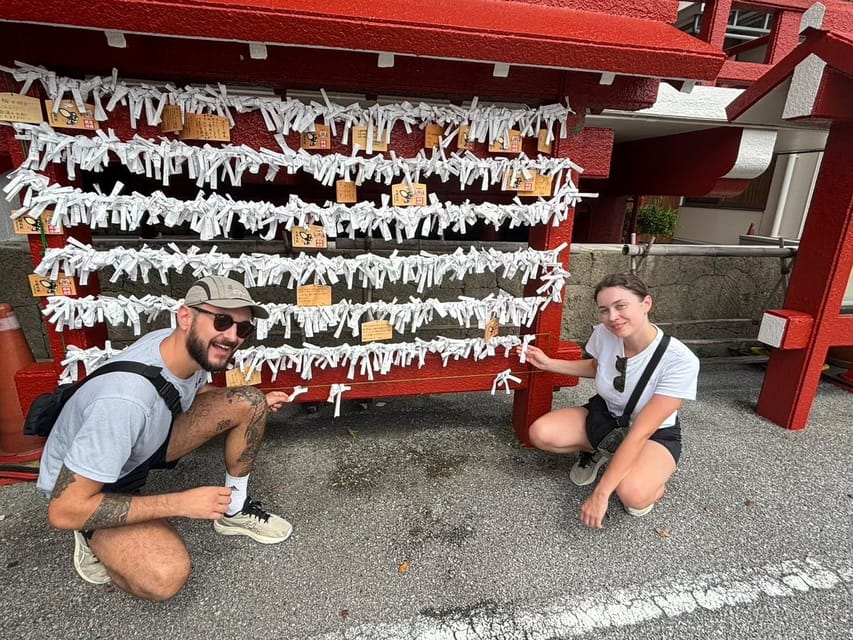
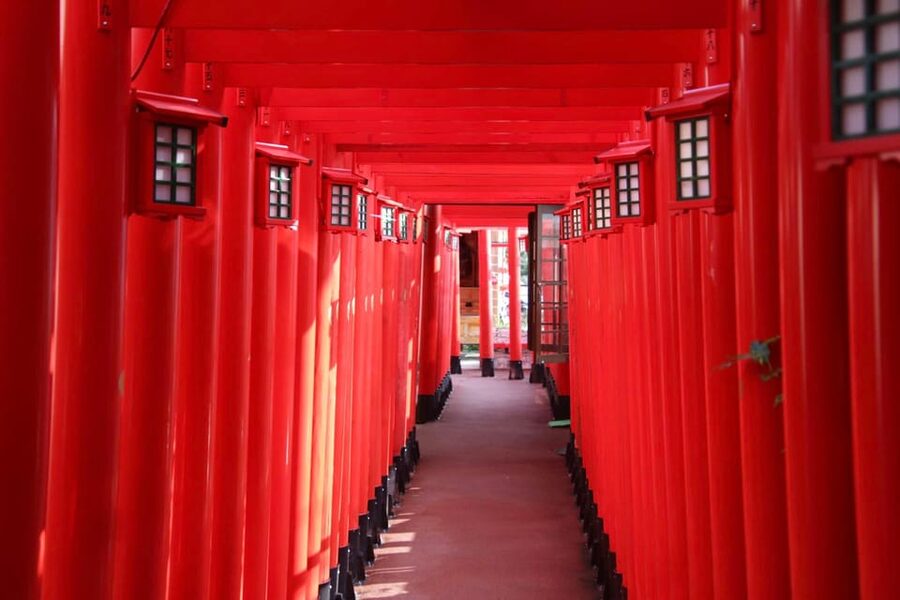
Daruma Temple is known for its red daruma dolls and torii gate. The site is connected with prayers for health and pregnancy, so it offers a look at the personal hopes people bring to religious places.
The bold red decorations make this one of the more immediately visual stops. Your guide can explain the customs connected with the temple and help you understand why daruma figures appear here.
This is also a good example of why a guide adds value. You can photograph a red gate and a collection of dolls without knowing what they represent. A short explanation turns the stop into something more useful and respectful.
Allow about 20 minutes here based on the planned timing. That is enough for an explanation, photographs, and a quiet look around without making the tour feel rushed.
Seikoji Temple offers a calmer pause
Seikoji Temple changes the pace. It has a peaceful atmosphere, Jizo statues, and a modern building. The contrast between the contemporary structure and the traditional religious figures makes it a worthwhile stop even if you have seen many temples elsewhere in Japan.
Jizo statues are often linked with protection, children, and travelers, but the exact meaning can depend on the setting. Listen to the guide’s explanation rather than treating the statues as generic decoration.
The visit is relatively short, about 10 minutes in the planned schedule. That may feel brief if you enjoy quiet temple spaces, but the compact timing keeps the three-hour route moving. You are seeing several distinct sites, not spending an hour at one complex.
A spring and a former royal mausoleum
The full experience also highlights Saki Kasahigawa, described as a miracle spring flowing from deep forest. Water has a strong place in Okinawan spiritual traditions, and a spring gives you a different kind of historical connection from a gate or temple building.
You may find this stop especially appealing if you prefer natural details and small local landmarks to large monuments. The flowing water offers a moment to slow down and consider how people connected sacred places with the surrounding land.
Sogenji Temple provides another change of setting. It was a former royal mausoleum, and its park has a clean, quiet feel, along with a gate and gajumaru tree. This stop links the religious route to Okinawa’s royal past.
The supplied route details place the main listed stops at Shuri Kannon, Ankokuji, Daruma Temple, and Seikoji, while the broader description also includes Saki Kasahigawa and Sogenji. Ask the operator what the day’s exact route will include when you book, since timing and weather can affect the sequence.
The guides make a real difference

The quality of the guiding is central to this experience. Guides named in the tour feedback include Maki, Maria, Reiji, Hiro, Jojo, Tiny, and Sally. The guide assigned to you will depend on the date and language, but the tour is offered in English, Chinese, and Japanese.
Maki is noted for adapting the outing to the people in her group, taking photos, and offering ideas for what to see afterward when time allowed. Maria is described as friendly, clear in English, and attentive to the practical side of the ride. Reiji is praised for detailed explanations at each stop, while Hiro is noted for checking hydration and bike comfort.
Those details point to the sort of service you should expect: not only historical information, but also help with traffic, directions, pace, and comfort. That is particularly important on a cycling tour, where a guide who notices when you are struggling can make the difference between an enjoyable outing and a tiring one.
Some groups have also received an extra bakery stop. Treat that as a possible bonus, not a fixed part of the route.
How much value do you get for $95?
At $95 per person, this is not the cheapest way to see Naha. You are paying more than the cost of walking around Shuri independently, and temples themselves may not require an admission fee.
The value comes from combining several services in one three-hour outing:
- Electric bicycle rental
- Helmet rental
- Helmet intercom communication
- A live guide
- A small group of no more than five
- Route planning through less obvious parts of Shuri
The e-bike is important because it makes a hilly route manageable. The guide is just as important because several temples are tucked into side streets and are not easy to connect without local help.
The price makes the most sense if you have limited time in Naha, want an active morning or afternoon, and would otherwise need to arrange bikes and navigation yourself. It is less compelling if you prefer slow, independent temple visits or already know Shuri well.
Meals, drinks, and money for offerings are not included. Bring water and expect to pay separately if you want a drink or food during or after the tour.
Who will enjoy this ride most?
I would recommend this tour to adults, older children who can ride confidently, and anyone who wants more than the usual Naha sightseeing loop. It suits people who enjoy history, local religious customs, neighborhood streets, and light physical activity.
You do not need to be a serious cyclist. The electric assistance and regular stops keep the ride approachable, and guides have adjusted the pace for different skill levels. You do need to know how to ride a bicycle and feel able to manage streets and hills.
Wear comfortable clothing and closed shoes. Sandals and flip flops are not permitted. Okinawa can be sunny and warm, so sunscreen, a hat, and water are sensible choices.
This is not the right pick for someone who cannot ride a bike, dislikes cycling near traffic, or wants a fully seated sightseeing trip. Smoking is not allowed during the tour.
Weather can also change the plan. If the chance of rain exceeds 70 percent or severe weather is expected, the operator may alter the route and will contact you the day before.
Practical details that make the day easier
The tour starts and ends at the same bike shop, so you do not need to arrange a separate ride back from Shuri. The shop is near Monorail Makishi Station, making it convenient if you are staying around Kokusai Street or using the monorail to reach central Naha.
Plan to arrive ready to cycle. Comfortable shoes matter more than fashionable footwear, and loose but practical clothing will make the ride easier. Carry only what you need, since you will be getting on and off the bike several times.
You can cancel up to 24 hours in advance for a full refund, and the reserve-now, pay-later option gives you some flexibility while planning. Check available starting times, since the tour lasts three hours and the exact departure schedule can change.
Should you book the 12 Zodiac Temples e-bike tour?
Book it if you want to see Naha through Shuri’s smaller temples, need help with the hills, and value a guide who can explain local customs as you go. The combination of e-bike access, a five-person group, helmet communication, and stops such as Shuri Kannon, Daruma Temple, and Sogenji gives you a fuller view than a simple visit to Shureimon Gate.
Skip it if cycling is not comfortable for you, if you want a slow independent temple day, or if $95 feels high for a three-hour activity. For the right rider, though, this is a practical and personal way to connect the history, faith, and backstreets of Naha without spending the day climbing Shuri’s hills on foot.
FAQ
Where does the Naha e-bike tour begin?
It begins at the bike shop in Daishobiru, about a five-minute walk from Monorail Makishi Station and next to a post office.
How long does the tour last?
The tour lasts three hours and returns to the same bike shop where it begins.
How much does the tour cost?
The listed price is $95 per person.
What is included in the price?
The price includes an electric bicycle, a helmet, and a guided tour with a helmet intercom system.
Which languages are available?
The tour is offered with live guides in English, Chinese, and Japanese.
How large is the group?
The tour is limited to five participants.
Do I need to know how to ride a bicycle?
Yes. People who cannot ride a bike are not suitable for this experience.
What should I bring?
Bring comfortable shoes, water, sunscreen, and a hat. Clothing suitable for cycling is recommended.
What happens in bad weather?
If the precipitation probability exceeds 70 percent or severe weather is expected, the operator may change the plan and will contact you the day before.
Newly added boat runs around the world
- Speed Boat Trip: Kotor Bay attraction , Blue Cave and beach time★ 5.0 · 63 reviews
- Speedboat Tour to Lady of the Rock, Mamula and Blue Cave Swim★ 5.0 · 132 reviews
- Kotor: Boka Bay Grand Explorer: 6.5-Hour Private Speedboat Tour★ 5.0 · 2 reviews
- Experience Speedboat Tours in Kotor, Montenegro★ 5.0 · 5 reviews
- Blue Cave 3 hours PRIVATE tour with modern speedboat★ 5.0 · 29 reviews
- Blue Cave, Lady of the Rocks and Kotor Bay SpeedBoat Tour 3H★ 5.0 · 70 reviews
- Boka Bay tour by car or speedboat (Private tour)★ 5.0 · 4 reviews
- Blue Cave and Our Lady of the Rocks – 3h Private Speedboat Tour★ 5.0 · 13 reviews
RIB & Zodiac Boat Tours, side by side.

Tadoussac/Charlevoix: Whale Watching Zodiac Tour
Read our review →

From Stavanger: Lysefjorden & Pulpit Rock RIB Boat Tour
Read our review →

From Svolvær: Lofoten RIB Sea Eagle Safari Trollfjord Cruise
Read our review →

Granite Falls Zodiac Tour by Vancouver Water Adventures
Read our review →
Kauai: Nā Pali Coast Zodiac Raft Expedition and Snorkeling
Read our review →Other lists this boat trip sits in