Review · PORTUGAL
Horta: University Startup Whale and Dolphin RIB Boat Trip
Horta is one of the Azores’ best places to search for whales, and this three-hour RIB trip adds something useful: a marine researcher on board. You may see resident sperm whales, dolphins, turtles, seabirds, or seasonal visitors such as blue, fin, sei, and humpback whales. I like the university connection, and I like that land-based spotters help the crew find animals instead of simply racing around at random.
The boat carries up to 16 people, though some departures have been much smaller. You get waterproof clothing, safety insurance, and a proper wildlife briefing. The trade-off is the ride itself: a semi-rigid boat can be rough and wet, so this is not a good choice during pregnancy, with serious back problems, or after recent surgery.
Key points at a glance
- University research on the water: A marine researcher from the University of Lisbon and the Azores explains animal behavior and helps collect data.
- Wildlife changes with the season: Sperm whales stay year-round, while blue, fin, sei, and humpback whales are more seasonal.
- Fast RIB, small-capacity feel: The boat takes up to 16 people, with some outings running at around 11 or 12 participants.
- Land spotters guide the search: Whale watchers on Faial and Pico help the crew head toward areas where animals have been seen.
- More than whales: Dolphins, loggerhead turtles, tuna, shearwaters, terns, flying fish, sharks, and sunfish may appear.
- Plan for spray and motion: Waterproof trousers and a jacket are supplied, but quick-drying shoes remain a smart choice.
Why the university connection matters
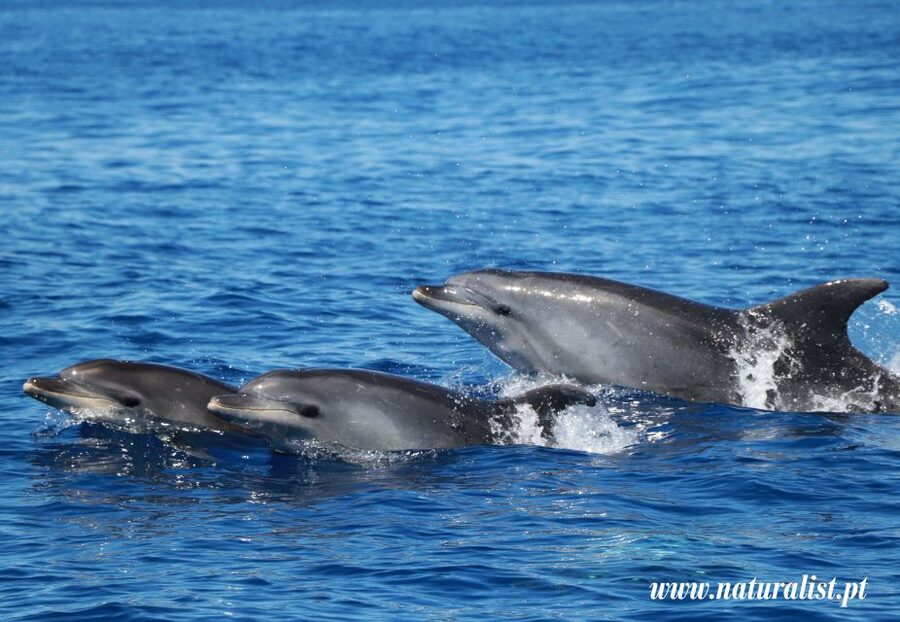
Many whale trips give you a captain, a guide, and a chance to see a blow on the horizon. This one places a marine researcher or biologist beside you. That changes the feel of the outing. You are not only waiting for an animal to surface. You are learning how scientists identify species, read behavior, and record marine life.
The research link is not just a label. The company works with whale spotters on land in Faial and Pico, and the university researcher helps collect data during the trip. Your sightings therefore contribute to a wider picture of the animals using the waters around the Azores.
Guides such as Anna and Cristiana have been singled out for clear explanations about whales and dolphins. The exact guide depends on the departure, but you can expect the tour to be conducted in English or Portuguese. Spanish is also listed for these expeditions, while French needs to be requested ahead of time and depends on availability.
I especially value the live explanation when several species appear close together. A group of dolphins may look like a blur of fins at first. A marine biologist can point out differences in body shape, movement, surfacing patterns, and social behavior while you are still watching.
More Dolphin and Whale Watching by Speedboat in Portugal
- Albufeira: Benagil Caves & Dolphin Watching Speed Boat Tour
★ 4.6 · 6,316 reviews - Funchal: Whale and Dolphin Watching Speed Boat Tour
★ 4.6 · 526 reviews - Pico Island: Azores Whale & Dolphin Watching on Zodiac Boat
★ 4.8 · 408 reviews
Horta marina to open water
Meet at Naturalist, Science and Tourism Whale Watching in the marina. Arrive 15 minutes before departure, at 8:45 for the 9:00 morning trip or 1:45 for the 2:00 afternoon trip. Hotel pickup is not included, so allow time to reach the marina on your own.
The outing begins with a roughly 10-minute safety briefing. This covers the boat, the clothing, and the basic rules for moving around on a RIB. Take it seriously. A RIB is exciting because it is quick and close to the water, but it is not a calm sightseeing launch.
You will receive waterproof clothing. Wear something comfortable beneath it, and choose shoes that can handle spray or dry quickly. The front seats offer the strongest sense of speed and the clearest low angle over the water, but they also tend to get wetter. If you prefer a gentler ride, ask where the most sheltered seating is before departure.
The boat is described as a 16-passenger RIB. Actual group size can be smaller, and one recorded outing had 11 participants with two marine biologists. That gives you a better chance of hearing the guide and seeing around the people beside you.
How the whale search works
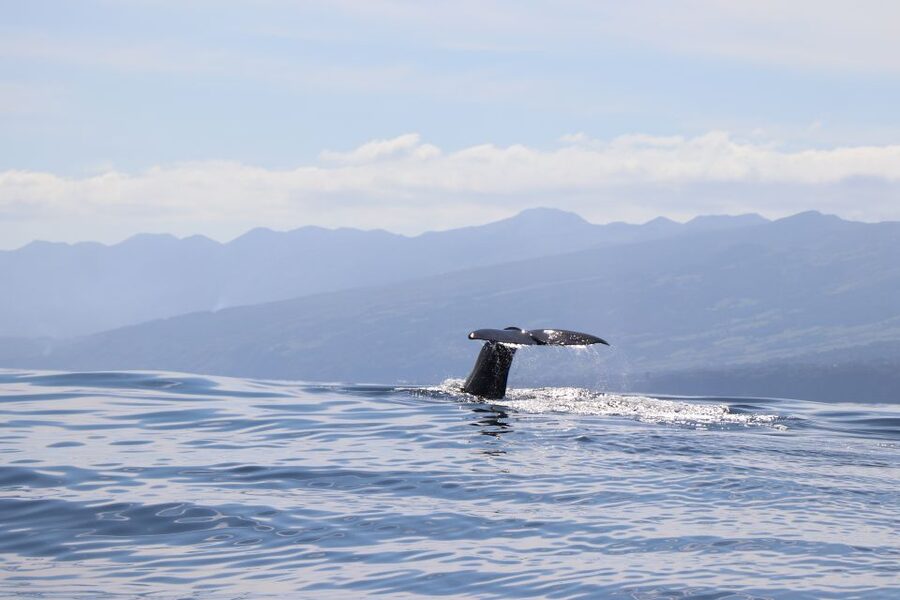
The crew does not follow a fixed route with a guaranteed sighting at a marked location. Whale watching is a search, and the sea sets the schedule. Land-based spotters watch from Faial and Pico, then pass useful information to the boat team.
This method saves time and fuel. Instead of searching the whole horizon, the captain can head toward an area where a whale or dolphin group has been detected. Conditions can still change quickly. Animals move, visibility shifts, and a calm start does not promise a calm return.
The company provides information about species presence before each trip. That is helpful when you are deciding how to set expectations. Seeing three different kinds of whales is possible, but so is seeing dolphins and birds without a whale. One outing had no whales, which is an important reminder that no responsible wildlife operator can promise a particular species.
The crew may wait in one area and then move to another. This happened on a successful sperm whale trip, with the captain adjusting position to reach the animals while keeping a respectful distance. That patience is part of good wildlife watching. You may spend long stretches scanning empty water, then suddenly see a blow, a back, or a dorsal fin.
The wildlife you may see
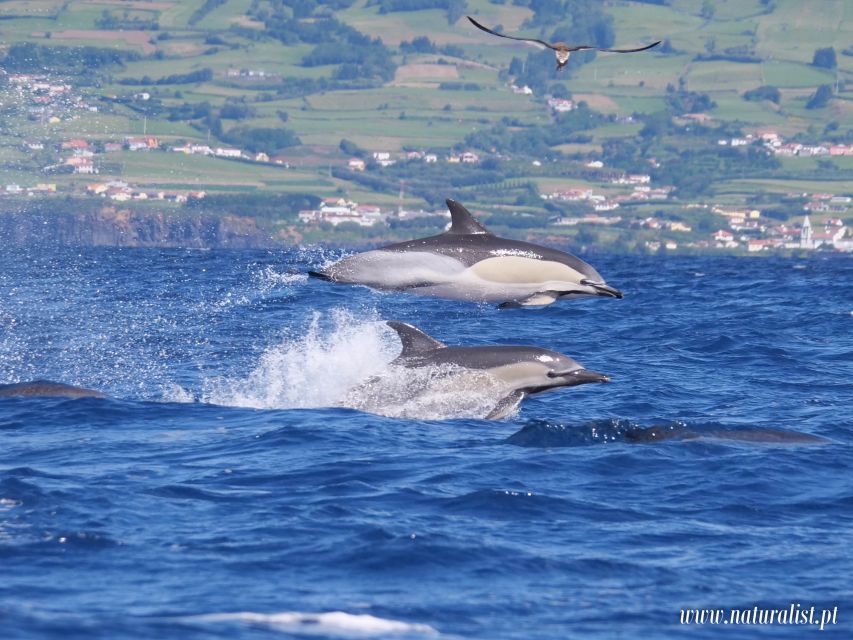
The Azores sit in a productive part of the Atlantic, and more than 25 cetacean species occur in the region. On a normal trip, two or three species are often observed, though the number varies.
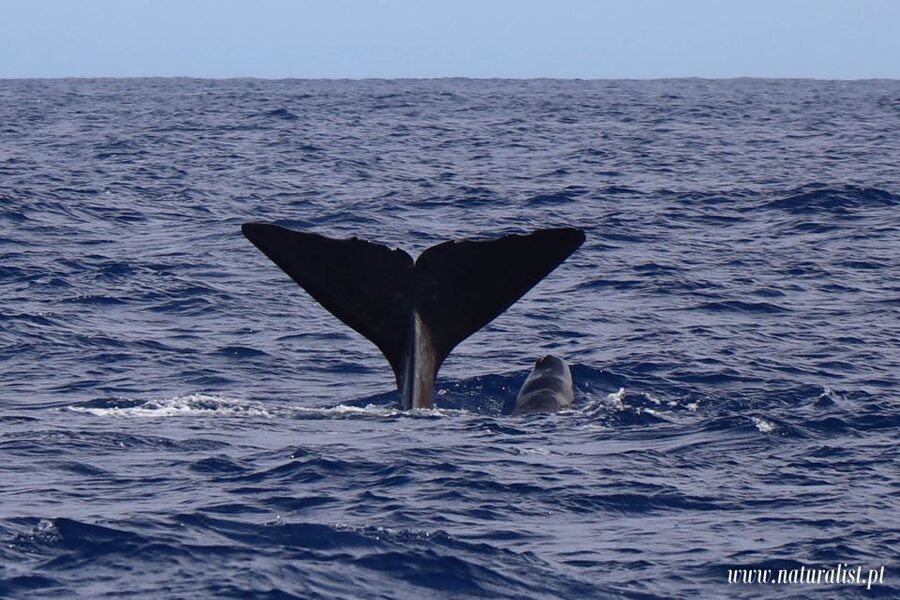
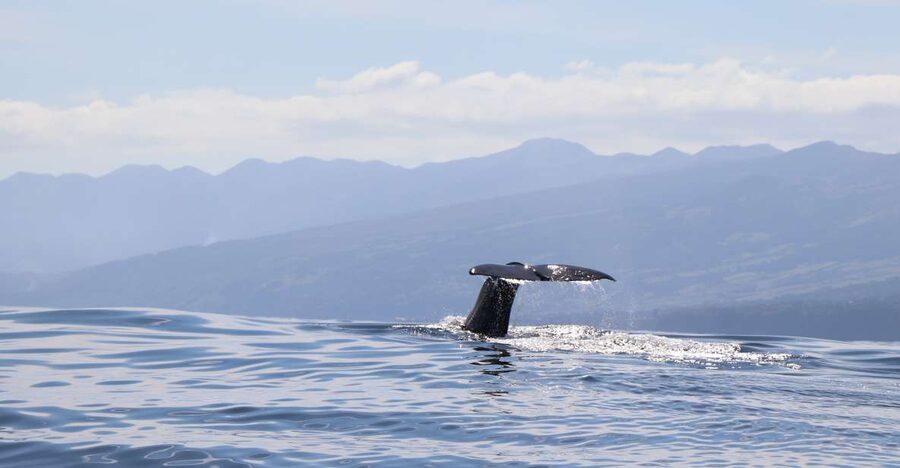
Sperm whales are the main year-round whale in these waters. Their tall blows and large, dark bodies can make a powerful first sighting. The trip has produced sightings of several sperm whales together, including five on one spring outing.
Season affects the chances for other large whales:
- Blue and fin whales are especially associated with spring.
- Sei and Bryde’s whales can occur in summer.
- Humpback whales are migratory visitors.
- Other migratory species may pass through at different times.
Dolphins give you another strong reason to go. Bottlenose, Risso’s, and common dolphins are resident species, while several other kinds may pass through. A group can be quiet one moment and highly active the next, riding the RIB’s wake or moving across the sea in a tight pack.
The species list extends well beyond cetaceans. Loggerhead and green turtles live in the Azores, and leatherback and Kemp’s ridley turtles can also appear. Flying fish, squid, octopus, hammerhead sharks, blue sharks, and ocean sunfish are possible sightings. You should treat these as welcome extras, not promised targets.
Birdwatchers should keep their eyes up. Cory’s, great, and Manx shearwaters may be seen, along with common and roseate terns. One outing included shearwaters, tuna, and a large feeding scene involving whales, dolphins, and thousands of birds. That sort of mixed wildlife event is often more memorable than a single isolated sighting.
More RIB and Zodiac Boat Tours in Portugal
- From Calheta: Whale and Dolphin Watching RIB Boat Tour
★ 4.9 · 298 reviews - Benagil Cave Boat Tour – Catamarans or Rib – 2 H From Portimão
★ 3.5 · 288 reviews - Funchal: RIB Whale Watching Cruise and Optional Dolphin Swim
★ 4.6 · 273 reviews - Albufeira: Dolphins & Benagil Caves RIB Tour
★ 4.6 · 241 reviews
The guided wildlife stop
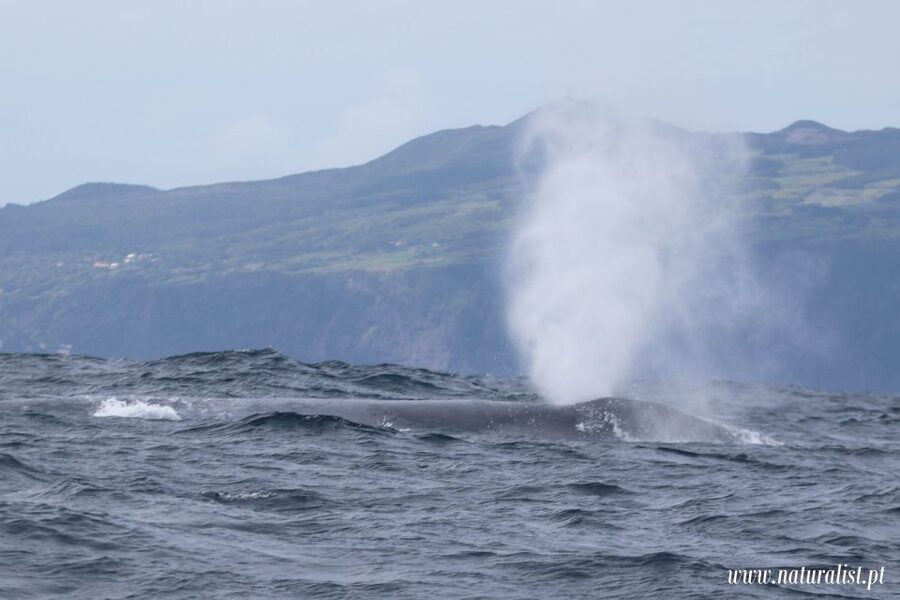
The main wildlife portion lasts about 30 minutes in the stated itinerary, but the full expedition averages three hours. The longer time includes the boat ride, searching, waiting, repositioning, and the return to Horta.
During the wildlife viewing, expect the guide to explain what you are seeing as the boat pauses or moves slowly. The captain’s handling matters here. Good positioning lets you watch without crowding the animals, and careful driving reduces unnecessary disturbance.
Several departures have included free photographs taken by the guide. This is not listed as a standard inclusion, so do not book solely for photos, but it can be a useful bonus. You should still bring a camera or phone in a waterproof case if you want your own images.
A RIB gives you a close-to-the-water viewpoint that larger boats cannot match. You feel the speed and see the sea at eye level. It is also less forgiving. Spray is likely, the ride may bounce, and people seated in front can get thoroughly wet even with supplied clothing.
Price and what the $101 buys you
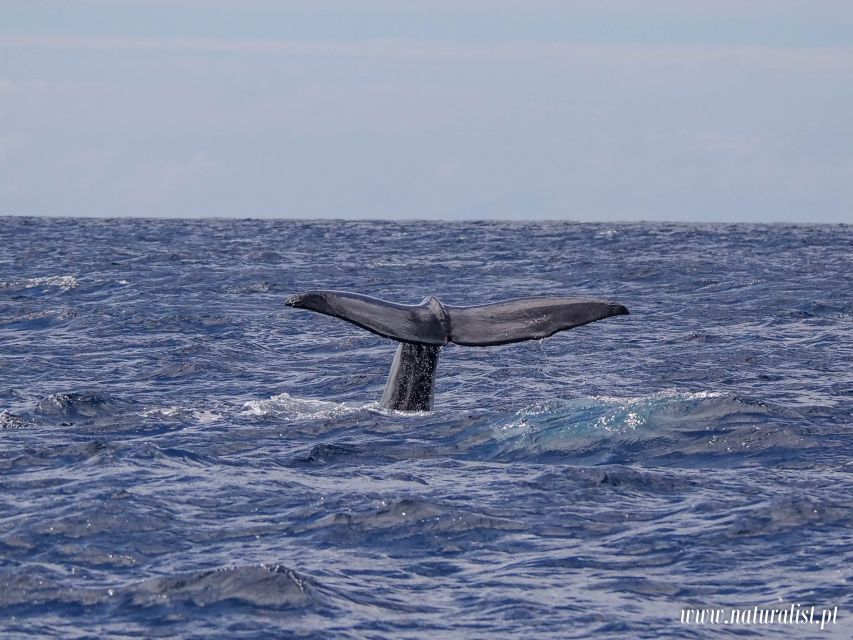
At about $101 per person, this is not the cheapest way to spend three hours in Horta. The price makes more sense when you count what is included: the RIB trip, waterproof clothing, safety insurance, the briefing, and a university-affiliated marine researcher on board.
The research element is the key value. If you only want a quick boat ride and a chance at a whale, less expensive options may suit you better. If you want species information, ethical viewing, and a guide who can explain the science as animals appear, the added cost is easier to justify.
Group size also affects the value. A boat capped at 16 people, and sometimes carrying fewer, feels more personal than a large vessel. You are more likely to hear the guide and get a clear view. The downside is that a small RIB provides fewer places to escape wind, spray, and motion.
The trip also offers reserve-now, pay-later booking and free cancellation up to 24 hours before departure. Weather can force a change. In that case, the trip may be rescheduled, with a full refund if the company cancels. One storm-related change was handled by moving the departure to another date and even arranging a start from Pico.
Weather, comfort, and safety
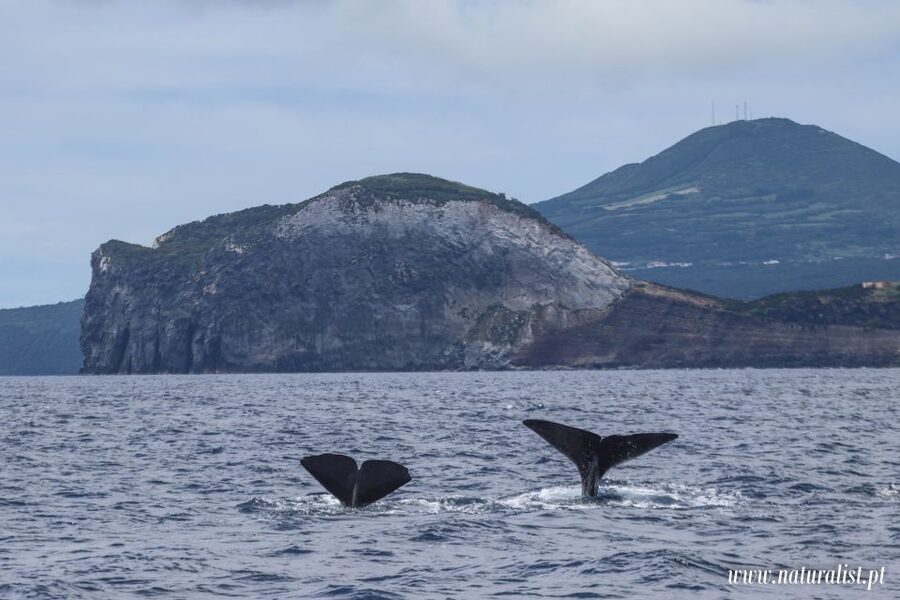
The Azores can give you sunshine, wind, and rough water in the same morning. A good forecast helps, but conditions at sea can still differ from conditions in Horta. The company may reschedule for weather, and you should keep some flexibility in your itinerary.
This is not suitable for children under five, pregnant women, people with back problems, or people who have recently had surgery. The boat’s movement can be demanding. If you are prone to seasickness, the supplied information does not promise medication or a calm ride, so plan according to your own needs.
Bring layers, even if the marina feels warm. Wear quick-drying shoes, protect cameras and phones, and avoid carrying loose items that could blow away. Food and drinks are not included. A small snack and water before or after the trip are sensible, though check the operator’s current instructions about what may be taken aboard.
The outing is physically simple in the sense that you do not hike or swim, but getting on and off a RIB and staying seated during motion still requires balance. Ask the crew for help if you need it.
Who will enjoy this trip most
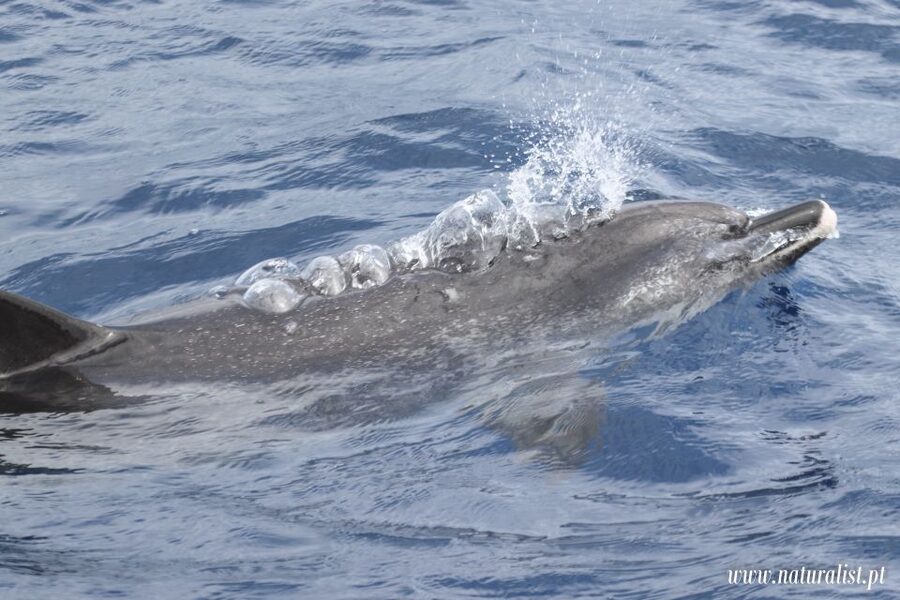
I would choose this experience if you want a serious wildlife outing rather than a simple scenic cruise. It suits people who enjoy learning the names and habits of species, care about respectful viewing, and do not mind waiting for nature to cooperate.
It is also a strong choice for photographers and birdwatchers. The possible mix of whales, dolphins, turtles, tuna, shearwaters, and terns gives you more to watch than a single-species trip.
Families with young children should look elsewhere because children under five are not accepted. Older children may enjoy the speed and excitement, but the boat can be wet and bumpy. If your main priority is comfort, choose a larger vessel if one is available in Horta.
Timing matters. Morning and afternoon departures are offered, but wildlife activity is not guaranteed to favor one time. Pick the departure that fits your wider Faial or Pico plans, then leave room for a weather change.
Should you book the Horta RIB trip?
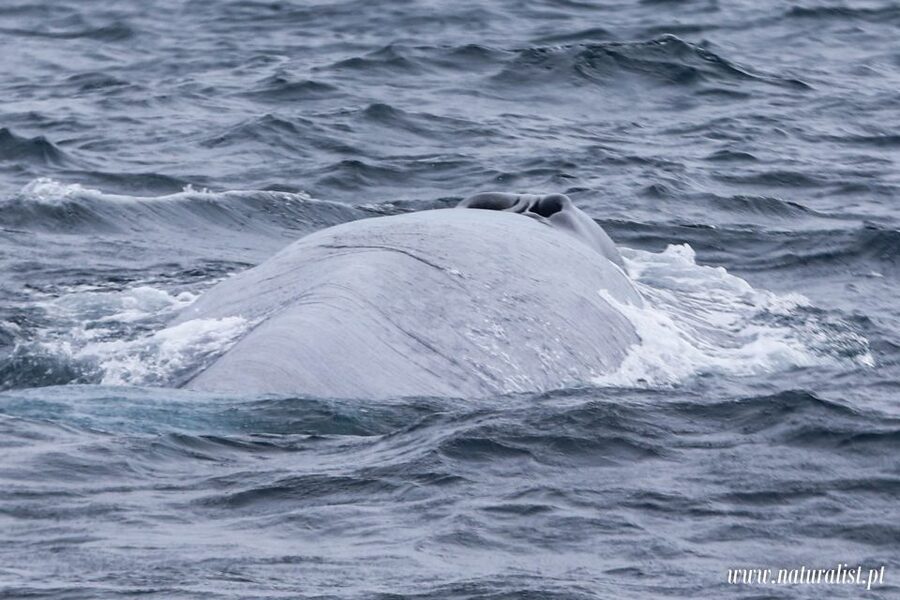
Book it if you want marine science, a small group, and a fast low-on-the-water ride. The university researcher is the main reason to choose this operator over a basic whale excursion, and the combination of land spotters and an experienced captain gives the search a sensible structure.
Do not book it expecting a guaranteed blue whale, sperm whale, or dolphin encounter. The sea decides. You may see several whales and hundreds of dolphins, or you may spend the trip watching birds and open water.
For most people who are comfortable on a RIB, the balance is very good: three hours, strong wildlife potential, waterproof clothing, safety cover, and a guide who can explain what is happening. I would keep the day flexible, arrive early, dress for spray, and treat every sighting as a gift rather than a promise.
FAQ
Where does the Horta whale-watching trip start?
It starts at Naturalist, Science and Tourism Whale Watching in the marina in Horta.
How early should I arrive?
Arrive 15 minutes before departure. For the 9:00 morning trip, arrive at 8:45. For the 2:00 afternoon trip, arrive at 1:45.
How long does the experience last?
The expedition takes an average of three hours.
What time do the trips depart?
Departures are listed at 9:00 in the morning and 2:00 in the afternoon. Check availability for the date you want.
What languages are available?
The main listed live-guide languages are English and Portuguese. The expeditions can also be conducted in Spanish. French must be requested in advance and depends on availability.
How many people fit on the boat?
The semi-rigid RIB carries up to 16 passengers.
What clothing is included?
Waterproof clothing is included, consisting of waterproof outerwear for the trip. Quick-drying or waterproof shoes are still recommended.
Is food included?
No. Food and drinks are not included.
Can the trip be canceled because of weather?
Yes. Trips depend on weather conditions and may be rescheduled. If the company cancels, a full refund is provided.
Who should not take this trip?
The activity is not suitable for children under five, pregnant women, people with back problems, or people with recent surgeries.
Newly added boat runs around Portugal
- 1 or 2 Hour Speed Boat Tour – Ria Formosa★ 5.0 · 34 reviews
- Jet Boat Caves and Emotion★ 5.0 · 12 reviews
- Dolphins & Caves on Rib Boat★ 4.5 · 13 reviews
- Algarve Jet Boat Tour from Albufeira★ 5.0 · 198 reviews
- Madeira: Coastal sightseeing tour by RIB boat★ 5.0 · 2 reviews
- Portimão: Benagil Caves Speedboat and Kayak Guided Tour★ 4.7 · 198 reviews
- Pinhão: River Douro Speedboat Tour with Water Sports★ 5.0 · 2 reviews
- Portimão: Benagil Cave, Marinha Beach Speedboat Tour★ 4.9 · 18 reviews
Portugal Speedboat Tours, side by side.
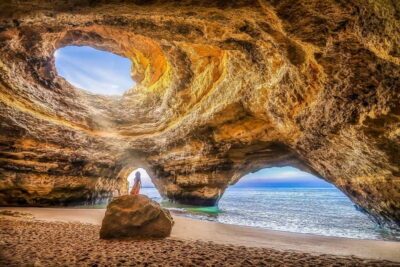
Portimão: Benagil Caves Speed Boat Tour with Sunset Option
Read our review →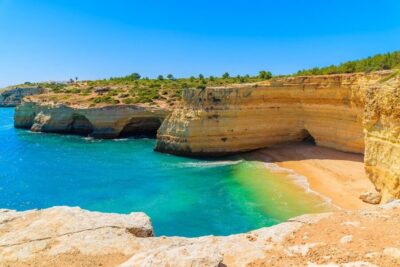
Portimão: Benagil Sea Caves Speedboat Adventure Tour
Read our review →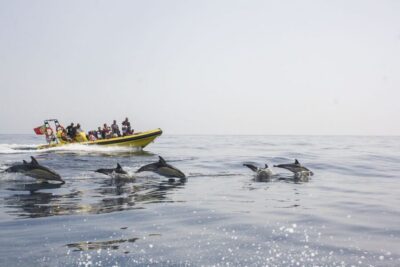
Albufeira: Benagil Caves & Dolphin Watching Speed Boat Tour
Read our review →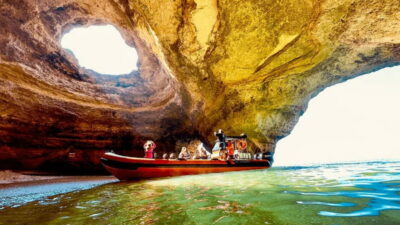
From Lagos: Benagil Caves Speedboat Adventure
Read our review →
Funchal: Whale and Dolphin Watching Speed Boat Tour
Read our review →